What is satellite refuelling and how close are we to solving it?
Space Bandits · 5 October 2026
In short
- Satellites are switched off when their fuel runs low, even when everything else still works.
- Docking with a satellite and steering it is already a commercial service. Northrop Grumman's MEVs have done it since 2020.
- As of October 2026, no company has refuelled a client satellite in orbit. Only governments have moved fuel between satellites: the US in 2007, and China apparently in 2025.
- The first commercial attempt is a Space Force demonstration in 2027 that pairs Orbit Fab's depot with Astroscale's refueller.
A satellite's working life often ends when its fuel runs out, not when its electronics fail. A 2010 NASA study found that about 20 satellites a year were retired because their propellant was exhausted, and that such a satellite "is usually otherwise fully functional" (NASA).
Fuel is spent on staying in place. For a satellite in geostationary orbit, 35,786 km up, a 1991 NASA study put the cost of keeping it from drifting north and south at a velocity change of about 46 metres per second every year, over a 15-year life (NASA). A satellite also has to keep some fuel back. At the end of its life it climbs to a graveyard orbit about 300 km above the geostationary belt, and ESA says the climb uses about three months' worth of station-keeping fuel (ESA). So operators switch off satellites that still work.
There are three ways to change that. A servicer can refuel a satellite. It can dock with the satellite and do the steering itself. Or it can tow a dead satellite out of the way. All three start with the same hard step, which is getting close to a satellite that was probably never designed to be approached.
What has been tried
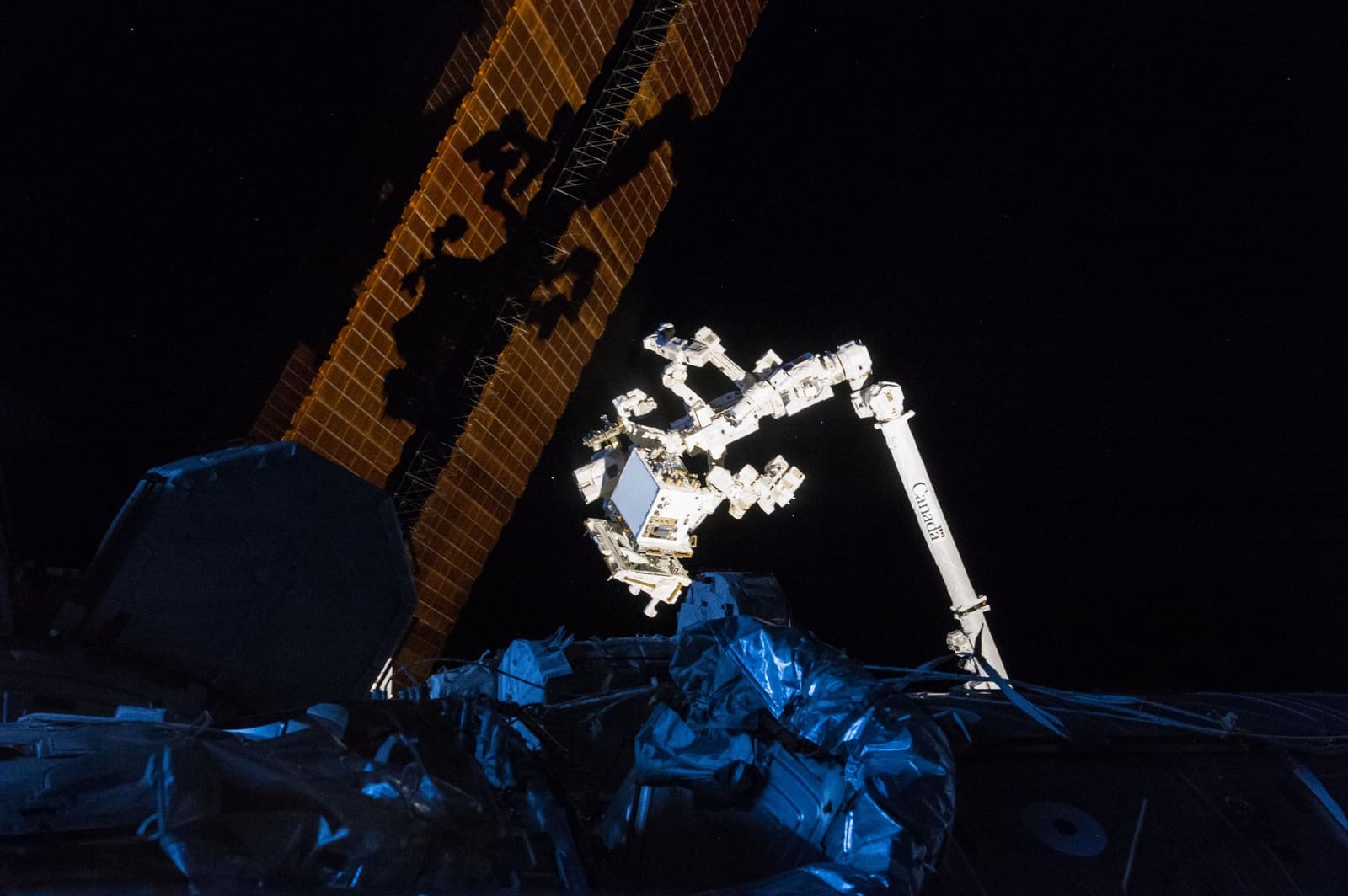
NASA started with robots. In July 2011 the last space shuttle flight delivered NASA's Robotic Refueling Mission to the International Space Station (NASA). Over six days in January 2013, controllers on the ground used Dextre, the station's Canadian robot, to cut wires, remove caps and transfer fluid the way a robot would have to on a satellite that was never designed to be refuelled.
The first commercial servicing used a different idea. On 25 February 2020, Northrop Grumman's MEV-1 docked with Intelsat 901, which had only a few months of fuel left. It was the first time two commercial satellites had docked (SpaceNews). Instead of refuelling Intelsat 901, MEV-1 stayed attached and used its own thrusters to keep the satellite properly oriented in orbit. A second vehicle, MEV-2, docked with another Intelsat satellite in April 2021 (SpaceNews). After five years, in April 2025, MEV-1 released Intelsat 901 in the graveyard orbit. It moved on to an Optus satellite and finished that job in August 2026. In July 2026 Northrop launched its next servicer, the Mission Robotic Vehicle. It has robotic arms and three smaller pods that it will fit to client satellites as strap-on engines (Spaceflight Now).
China has gone further and said less. In January 2022 its Shijian-21 satellite towed a dead BeiDou navigation satellite out of the geostationary belt (Breaking Defense). In January 2025 China launched Shijian-25, which its builder said would test "satellite fuel replenishment and life extension service technology" (SpaceNews). Trackers saw the two Shijian satellites meet in June 2025 (Space.com), and they stayed docked for months before separating in November (SpaceNews). China has not said whether any fuel moved. Chinese researchers now claim that Shijian-25 refuelled a different BeiDou satellite in February 2025, but US tracking data contradicts the claim (Asia Times).
NASA's own refuelling mission did not survive. OSAM-1 was meant to refuel Landsat 7, an Earth observation satellite that was never designed to be refuelled (AIP). NASA cancelled it in March 2024, citing "continued technical, cost, and schedule challenges" and "a broader community evolution away from refueling unprepared spacecraft, which has led to a lack of a committed partner" (NASA). Its review board found the project seven to eight years late and $1.5 billion over budget (NASA).
Why it is hard
Catching something that was not built to be caught. Satellites launched before servicing existed were not built with handles or docking ports, and a dead one may be tumbling. Astroscale's ADRAS-J spent most of 2024 working its way to within 15 metres of a spent Japanese rocket stage (Astroscale). It was an inspection mission, so it photographed the stage without touching it. The rescue of NASA's Swift telescope in 2026 showed how hard this is on a deadline. Katalyst's LINK launched in July to grab Swift and lift it into a higher orbit. It developed communication and orientation problems, the capture was dropped, and LINK re-entered the atmosphere on 25 September (NASA).
Moving fuel in weightlessness. In orbit, fuel does not settle at the bottom of a tank, so moving it from one spacecraft to another takes valves, seals and tanks built for the job. Orbit Fab's first experiment, on the space station in 2019, moved water between two test tanks (SpaceNews). OrbitAID has tested its docking and fuel transfer on two parabolic flights, which give a few seconds of weightlessness at a time (OrbitAID).
Agreeing on a port. Refuelling is far easier when the client carries a port made for it. The industry has moved that way, which is part of why OSAM-1 lost its partners. Orbit Fab's RAFTI is a refuelling port designed to replace the fill-and-drain valves satellites carry today (Military Aerospace), and the US Space Force has approved it as one of two refuelling standards for military satellites (Orbit Fab). Northrop's Mission Robotic Vehicle carries a different Space Force-approved port, its Passive Refueling Module, so that it can be refuelled itself (Northrop Grumman). In September 2025 the Space Force wrote a refuelling requirement into a satellite programme for the first time, for its next generation of space surveillance satellites (Breaking Defense).
Finding the customer. In 2022 Orbit Fab offered up to 100 kg of hydrazine in orbit for $20 million, and said service could start as soon as 2025 (SpaceNews). Its first delivery is now planned for the second quarter of 2027, to two Space Force satellites (Orbit Fab). Most of the missions below are paid for by NASA, the Space Force, ESA or JAXA.
Who's working on it
These are the companies in our directory that work on servicing, grouped by what each is trying to do first.
Docking and steering
Starfish Space builds Otter, a small spacecraft designed to latch onto satellites that have no docking port and move them (DefenseScoop). Its first prototype could not attempt a docking, but in April 2024 D-Orbit's ION tug came within about a kilometre of it, and the prototype photographed it (TechCrunch). Its second, Otter Pup 2, launched in June 2025, and a satellite built by Australia's Gilmour Space is now its docking target (Gilmour Space). The first full-size Otter launched on 1 October 2026 (Via Satellite). Its first job, for NASA, is to fly within a few hundred metres of several defunct US satellites and inspect them (Payload). For the Space Force, an Otter will move a dead satellite to a disposal orbit in a 2027 demonstration (DefenseScoop), and a second Otter is due for delivery in 2028 for work in geostationary orbit (Starfish Space).
Katalyst Space builds robotic spacecraft with arms. LINK was its first, and the Swift rescue its first mission. Its next spacecraft, NEXUS, is meant to reposition, refuel and repair satellites in geostationary orbit from 2027 (Katalyst).
Refuelling through a port
Orbit Fab has worked on refuelling since 2018. Tenzing, its first tanker, reached orbit in June 2021 (Orbit Fab). Its first fuel depot, Kamino, is due in the second quarter of 2027. It is meant to deliver 50 kg of hydrazine through RAFTI to two Space Force satellites, and Astroscale's refueller is part of the same demonstration (Air & Space Forces). Separately, Orbit Fab leads ASTRAL, a refuelling experiment for ESA and the UK Space Agency due by 2028 (Orbit Fab).
OrbitAID, in Chennai, builds a docking and refuelling port called SIDRP, plus a tanker and a robotic arm. It plans a two-satellite mission in early 2027 to inspect, dock, refuel and raise an orbit in one flight (Payload).
InspeCity, near Mumbai, builds the same kinds of parts, including a robotic arm and a refuelling port, and plans to fly them one mission at a time. Its August 2026 funding round pays for four missions over the next 12 to 18 months (InspeCity).
Removing debris
Astroscale started in 2013 with debris removal. In 2021 its ELSA-d demonstration made a magnetic capture in orbit of a client satellite it had built itself (Astroscale). After ADRAS-J's close approach it began bringing that spacecraft down in March 2026 (Astroscale). ADRAS-J2, part of a JAXA programme, will try to capture a rocket upper stage weighing about three tonnes (Isar Aerospace). It is booked on Isar's Spectrum rocket for Japan's 2027 fiscal year, which runs to March 2028 (Astroscale). Its US arm is building the refueller for the Space Force demonstration, now set for 2027 (Aviation Week).
ClearSpace, in Switzerland, was building ClearSpace-1 for ESA to capture a piece of debris. In August 2023 that target was itself hit by smaller debris (ESA), and in 2024 the mission was retargeted to an old ESA satellite, PROBA-1 (Via Satellite). In January 2026 ESA and ClearSpace started PRELUDE, a two-spacecraft demonstration of servicing and debris removal, targeting launch in 2027 (ClearSpace).
Orbital Lasers, a 2024 spinout from Japan's SKY Perfect JSAT, works on stopping tumbling debris from spinning by firing a laser at it, so that another spacecraft can grab it (Via Satellite).
Looking first
Every servicing mission starts with getting close and looking. Two companies sell that on its own. HEO Robotics photographs other spacecraft with cameras on partner satellites, and in September 2026 it flew its first rendezvous of its own, photographing a spent Chinese rocket stage from about 40 kilometres (HEO). Turion Space is building small spacecraft that photograph other satellites up close for the US Space Force (Via Satellite).
The latest from each company

Starfish SpaceUnited States
Satellite servicing with Otter

Katalyst SpaceUnited States
Robotic spacecraft that dock with satellites
- Achievement 25 September 2026 LINK exercises its xenon thrusters and three robotic arms as a demonstration, then re-enters the atmosphere after NASA ends its part in the mission source
- Contract 21 September 2026 Selected by the Pentagon's Operational Energy Capability Improvement Fund to build and fly ASGARD, a robotic spacecraft that assembles a power-beaming system in orbit source

Orbit FabUnited States
Gas stations in space
- Company 7 July 2026 Names Peter Shaper CEO, opens its Series B and takes more than $25M of interim financing led by Stride Capital; its first integrated refuelling architecture is due to launch in 2027 source
- Company March 2026 Founding CEO Daniel Faber hands over leadership as the company opens a $20M Series B source

OrbitAIDIndia
Refuelling satellites in orbit, from Chennai

InspeCityIndia
In-orbit servicing from Thane, India
AstroscaleGraduatedJapan
Space debris removal
- Contract 10 September 2026 Astroscale France joins an Exotrail-led France 2030 mission, to be contracted by CNES, to deorbit a Eutelsat OneWeb satellite in 2029-2030 source
- Contract 1 September 2026 Books ADRAS-J2, the JAXA mission to capture a three-tonne rocket stage, on Isar Aerospace's Spectrum for 2027 or 2028 source

ClearSpaceSwitzerland
Removing defunct satellites

Orbital LasersJapan
Lasers for debris removal

HEO RoboticsAustralia
Space object inspection
- Achievement 2 September 2026 Continuum-1, a satellite bought from Satellogic, holds station near a spent Long March 2C stage and images it from about 40 km at 8 cm per pixel, HEO's first rendezvous and proximity operation source
- Contract February 2026 Wins one of the NRO’s first three commercial non-Earth imaging contracts source

Turion SpaceUnited States
Droid spacecraft for space awareness
The latest milestones from each company's record. The newest is from 1 October 2026.
In their own words
We interviewed two founders in this field in 2019.
Daniel Faber started Orbit Fab in 2018 after helping to found, and later leading, Deep Space Industries, which made thrusters for small satellites. He told us that while talking to customers, and while designing spacecraft, "it was apparent that the constraints of limited fuel is a real pain point." He also said refuelling only works if everyone uses the same port: "To make this work we need everyone to use a standard 'fueling port'." He expected Orbit Fab's first operational tanker in orbit "in early 2020". Tenzing reached orbit in June 2021. Faber stepped down as chief executive in March 2026 (Orbit Fab). Read the 2019 interview.
Nobu Okada founded Astroscale in 2013. He told us that most of the debris already in orbit belongs to governments, and that with government help "we should prioritize which debris are the most critical and remove high priority debris, such as rocket upper stages." Five years later, ADRAS-J flew to within 15 metres of a spent upper stage, and ADRAS-J2 is booked to try to capture one. Read the 2019 interview.
How close are we?
Docking with a satellite and steering it is already a commercial service. Northrop's MEVs have done it since 2020, for Intelsat and then Optus.
Getting close to debris and inspecting it has been done too. ADRAS-J reached 15 metres in 2024, and HEO and Starfish are now selling inspection.
Capturing a dead object that was never designed to be caught has not been done commercially. ADRAS-J2 plans to try before March 2028.
Moving fuel from one satellite to another has so far been done only by governments. DARPA's Orbital Express did it in 2007, between two satellites built for the purpose (NASA), and China appears to have done it in 2025. As of October 2026, no company has refuelled a client satellite in orbit. The first attempt is the Space Force demonstration in 2027. It pairs Orbit Fab's depot with Astroscale's refueller.
What to watch
- Starfish's first Otter, launched on 1 October, inspecting defunct satellites for NASA
- OrbitAID's two-satellite docking and refuelling mission, early 2027
- The Space Force refuelling demonstration with Orbit Fab and Astroscale, and its Otter tug demonstration, both in 2027
- Katalyst's NEXUS and ClearSpace's PRELUDE, both due in 2027
- Northrop's robotic servicer fitting its first pod to an Optus satellite, late 2027 (Satnews)
- Astroscale's ADRAS-J2, by March 2028
- Orbit Fab's ASTRAL experiment, by 2028, and delivery of the second Space Force Otter, in 2028